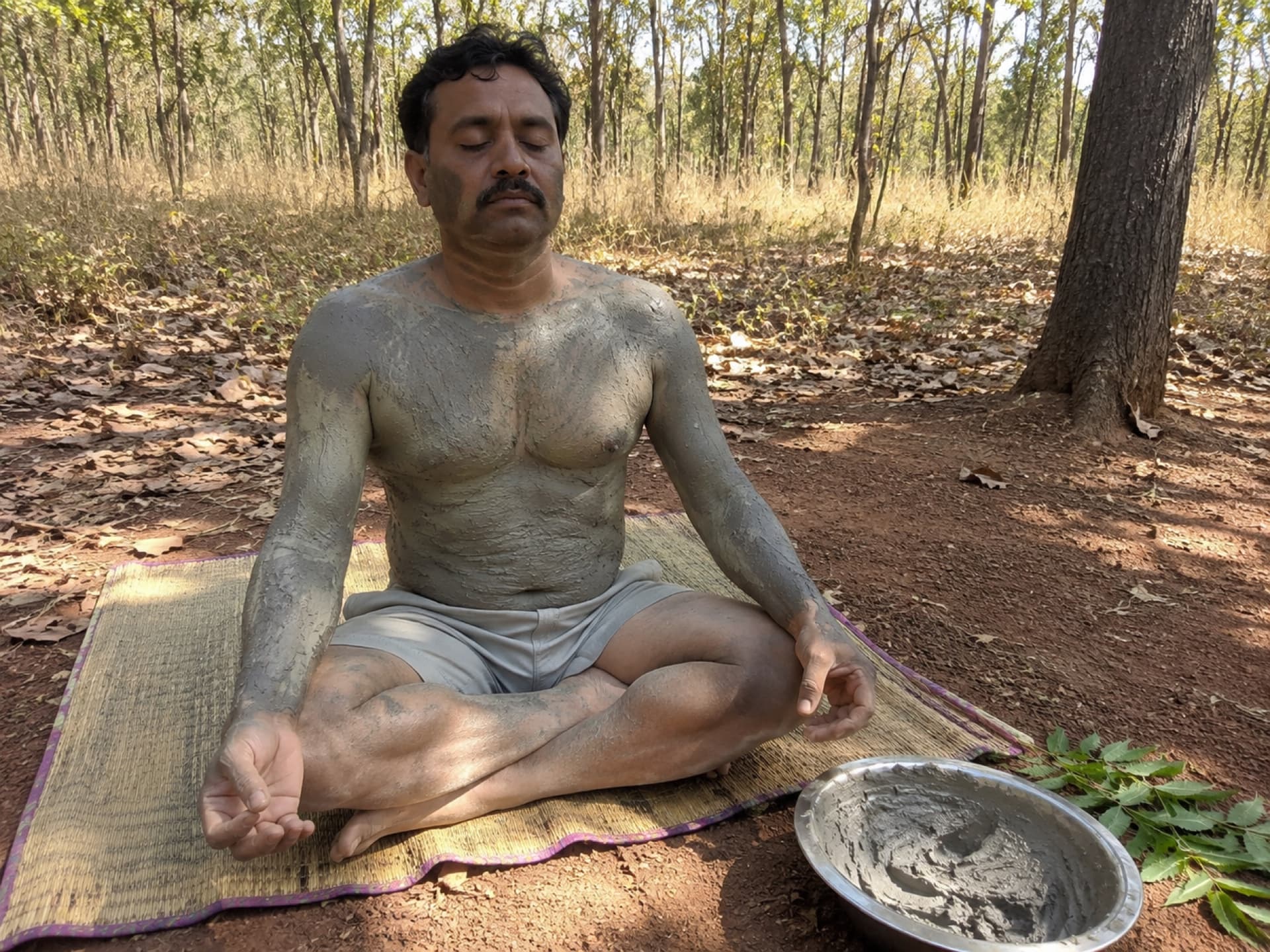
Mridu Shuddhi
Soil Bath
A clay body wrap — “the skin is the third lung.”
Aranyaani Healing Forest · Village Chedka, Madhya Pradesh
Let the forest be the ultimate healer.
The Forest as Healer
Modern urban life — pollution, processed food, chronic stress, artificial light, aggressive medicine — makes people chronically sick and prematurely aged. We believe the cure is not more products, but total immersion in wild nature and the ancient tribal (Adivasi) ways of living.
Modern life made us sick slowly. The forest heals the same way — slowly, completely.
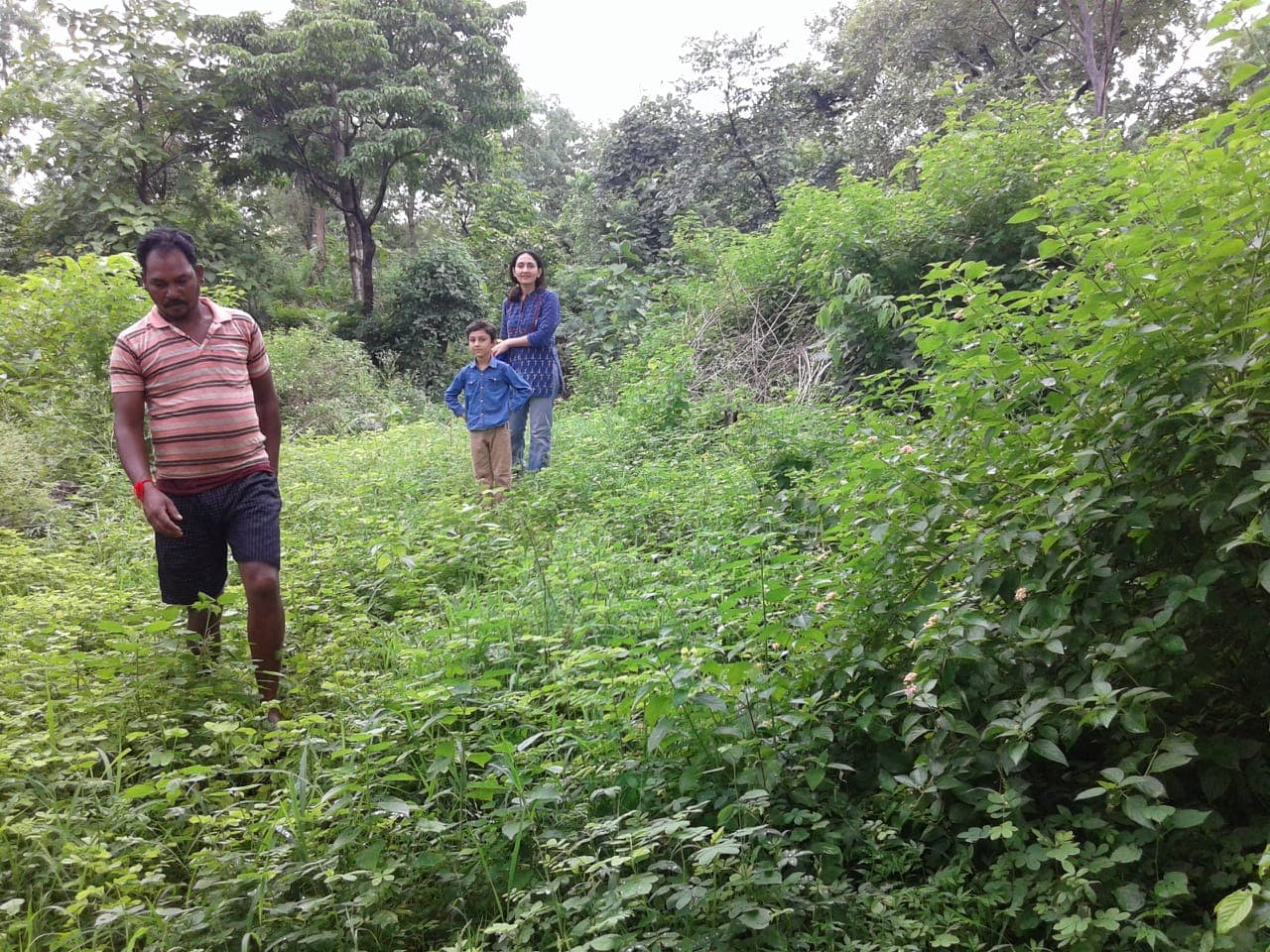
A wild walk through the food forest
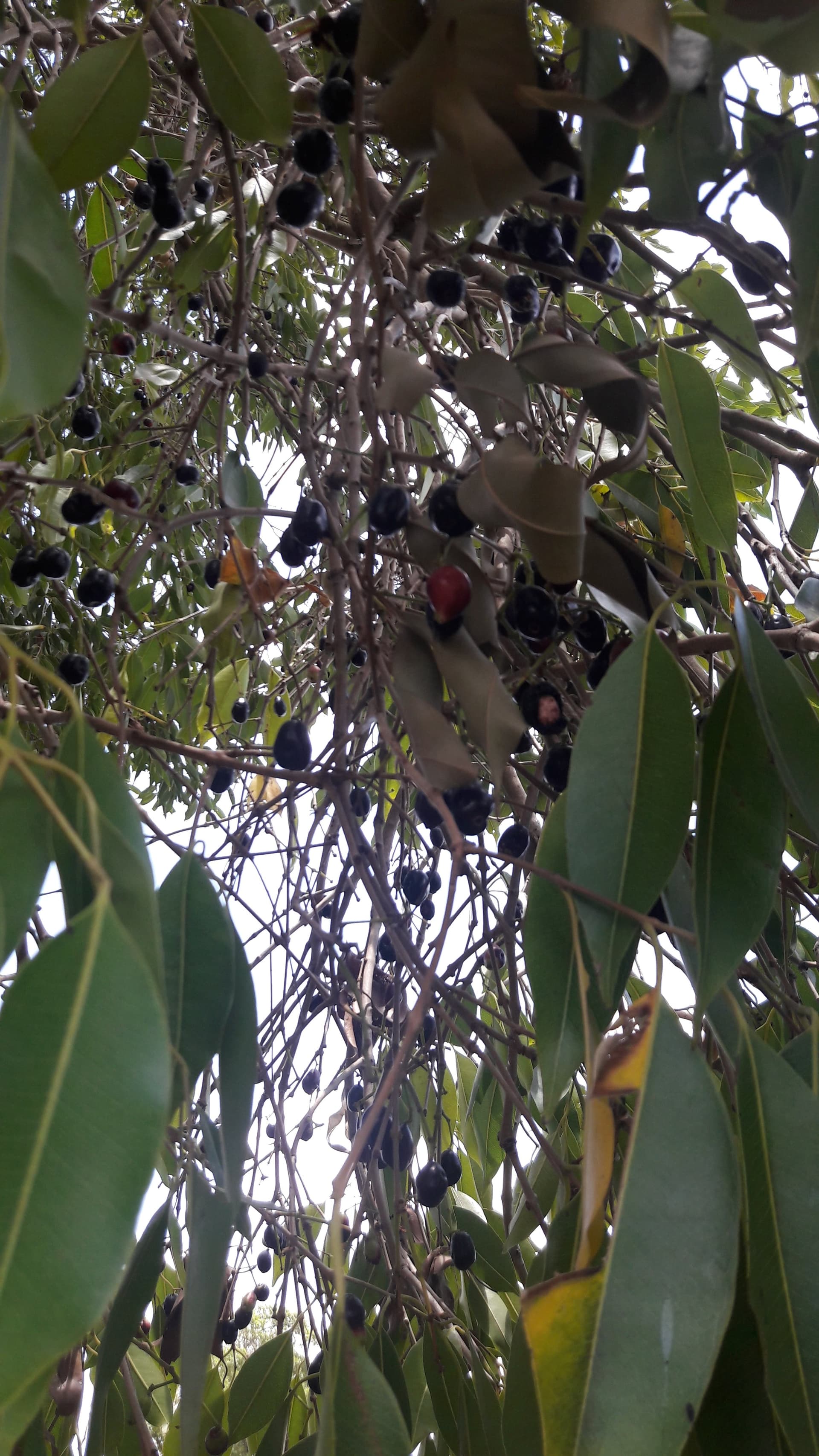
To heal is to habituate.
Primal Awareness
Living on the wild's edge shifts the amygdala from "Modern Anxiety" to "Primal Awareness" — a stress-buster that clears mental clutter in a single night.
Here, the forest is treated as a conscious being. Healing is "Ekatm" — oneness with it. You do not visit the forest; you rejoin it.
This reflects our philosophy of living, not medical advice. Guests come as they are; the forest does the rest, gently.
Those who feel older than their years — worn by city living
Those carrying chronic stress, fatigue or anxiety
Those whose lungs are tired of polluted air, or who live with asthma and lung stress
Those whose digestion has suffered from processed food and hurry
Those seeking a gentler path away from long-term dependence on strong medicines
Those with skin that has forgotten sun, soil and river water
Those depleted — in nutrients, in sleep, in spirit
Those crushed by urban and financial pressure who need to remember how to simply live
Where the healing lives
A 100-acre private dense forest merging into the Satpura forest and mountains, beside a young river, near Madai (Satpura Tiger Reserve).
Village Chedka · Sohagpur · Madhya Pradesh · India
The Journey
Healing follows the body's own clock. A week is the shortest honest unit.
To heal is to habituate. This is why a week is the beginning, not the whole.
01
Days 1–2
Shed the caffeine and the hurry chemicals.
02
Days 3–4
Hearing turns acute; digestion steadies.
03
Days 5–7
Anti-ageing begins; inflammation markers start to drop.
A Symphony of Slowness
There are no clocks here. We use the light.
The Blue Hour
The forest speaks first, before the sun — you wake to the dawn chorus, not an alarm.
The Blue Hour
Waking to birdsong — the gentlest cortisol-lowering there is.
Early Sun
Barefoot on moss while the ground is still cool.
Morning
Surya Tonic taken with the elders of the hamlet.
Mid-Day
Remote work over 5G, or simply forest bathing.
Afternoon
Food from the food forest, cooked over wood.
Late Day
The forest softens; so do you.
Twilight
Flames, voices, and the old stories.
The Dark
No blue light. The hours when cells repair.
You will leave the forest with a new pair of eyes, a quieter heart, and a body that finally remembers how to thrive.
The Forest Apothecary
Three signature potions, from herbs grown in the food forest, made in small batches in Adivasi clay pots.
brewed in small batches in Adivasi clay pots · offered as tradition, never prescription
This reflects our philosophy of living, not medical advice. Guests come as they are; the forest does the rest, gently.
Days Without a Timetable
Mridu Shuddhi
A clay body wrap — “the skin is the third lung.”
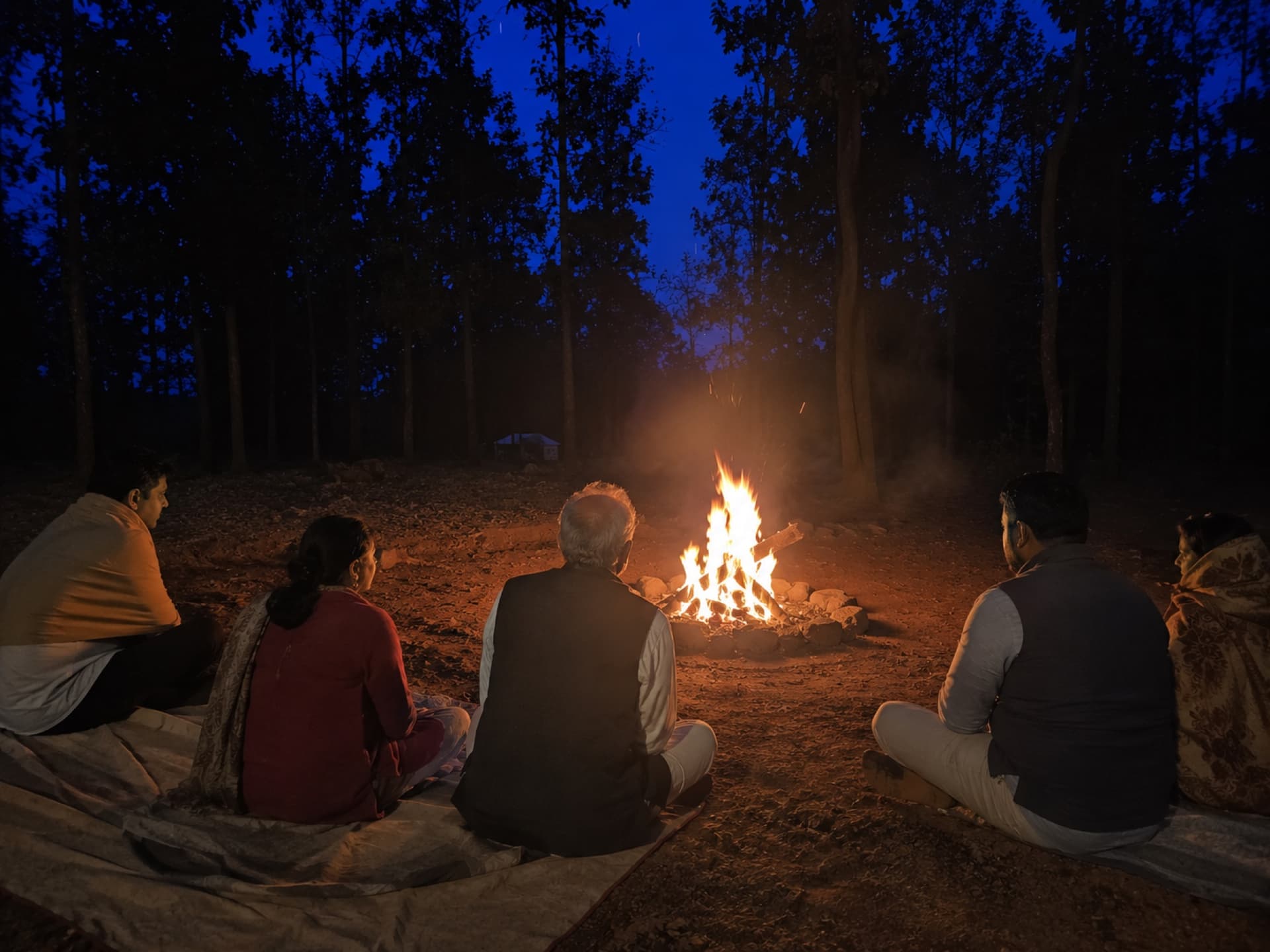
Agni Drashti
Evenings spent watching the fire, letting thought slow.
Unhurried walks through the wild edges of the forest.
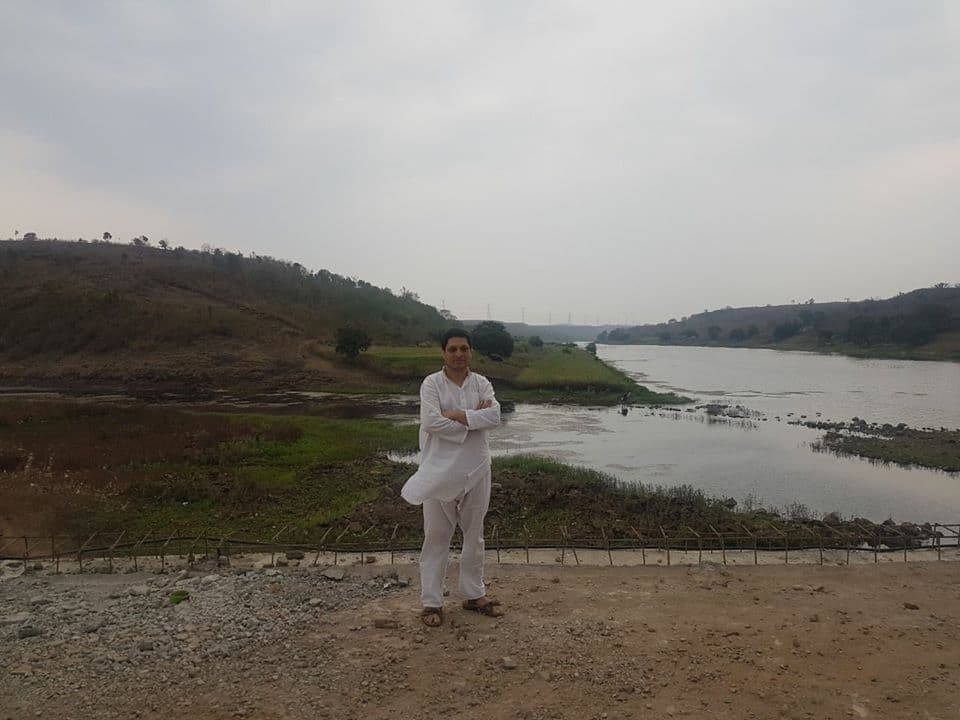
A trek to the origin of the Palakmati river.
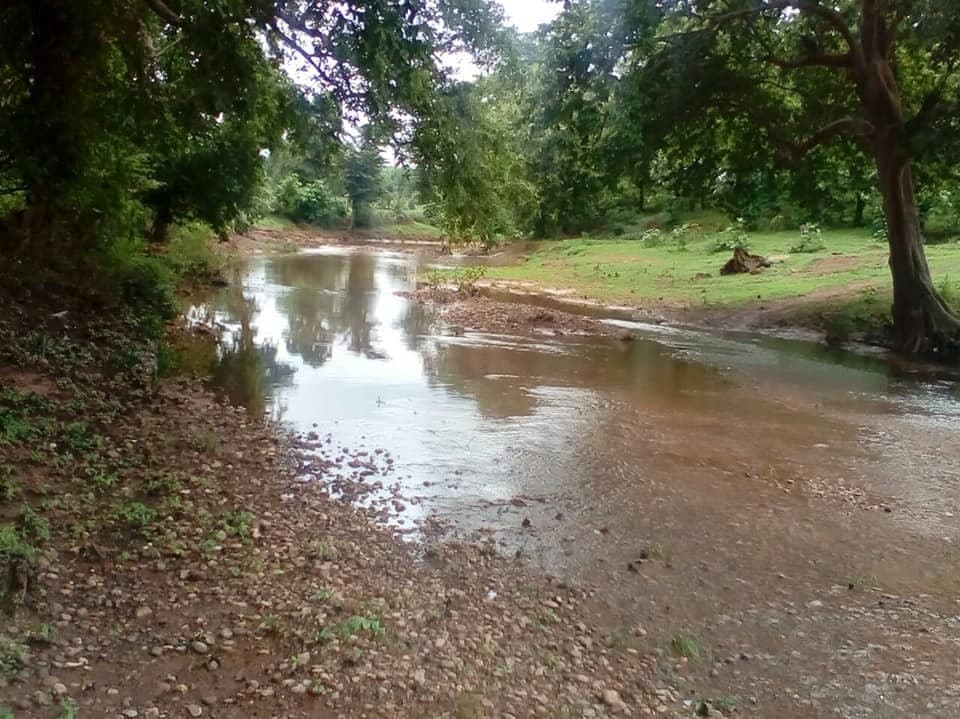
A slow boat safari on the Satpura's waters.
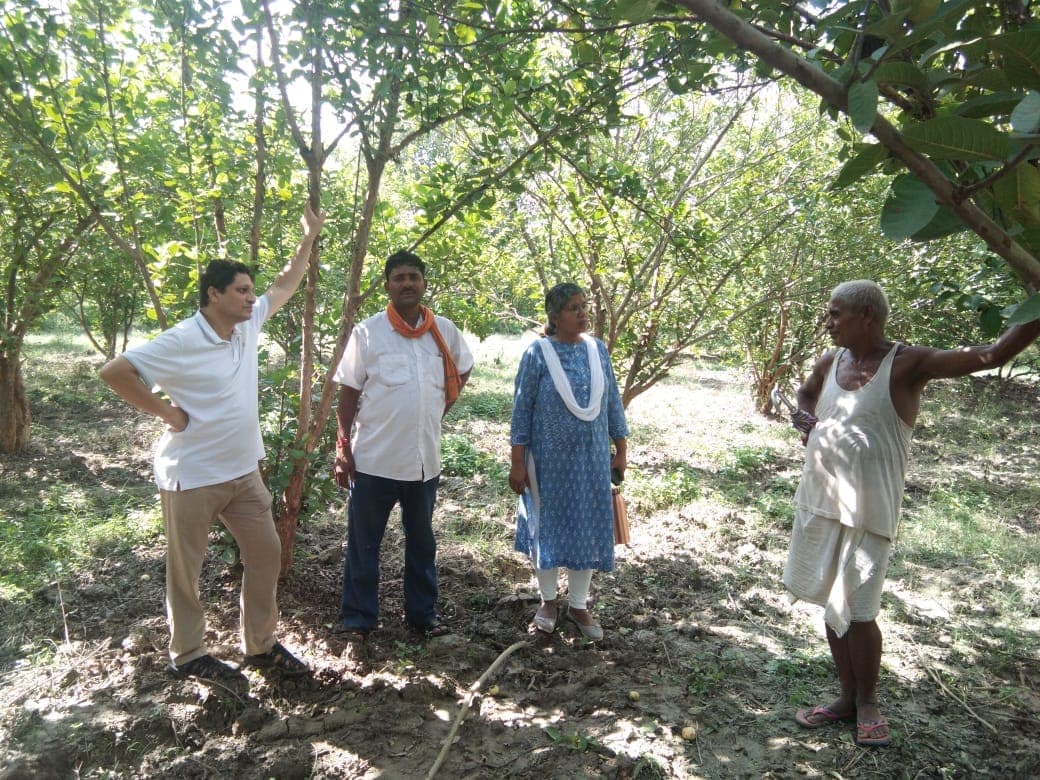
Gurukul-style conversations on Bharat's culture, consciousness and Kutumbs.
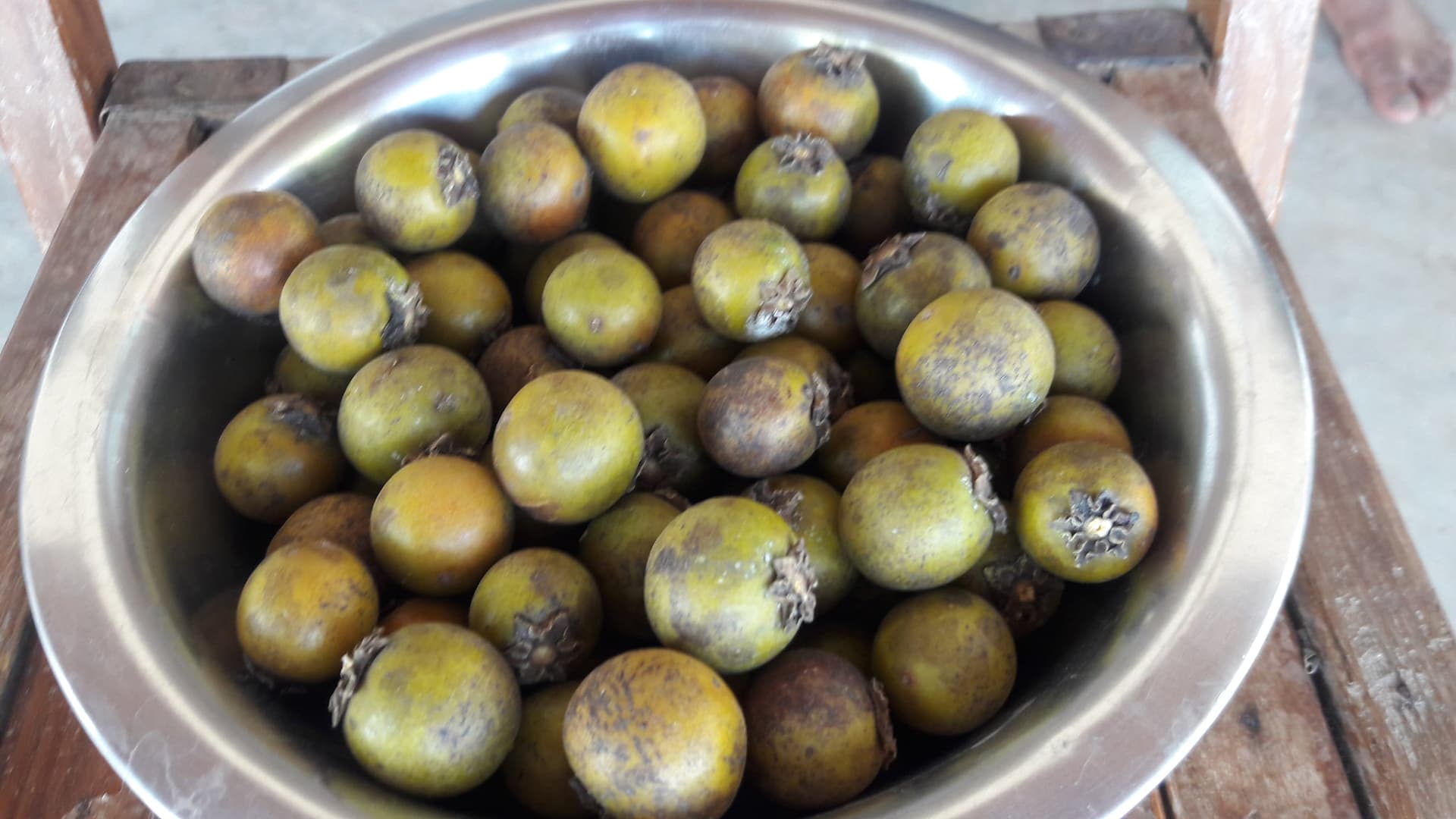
Simple work — tending cows, harvesting, choolah cooking.
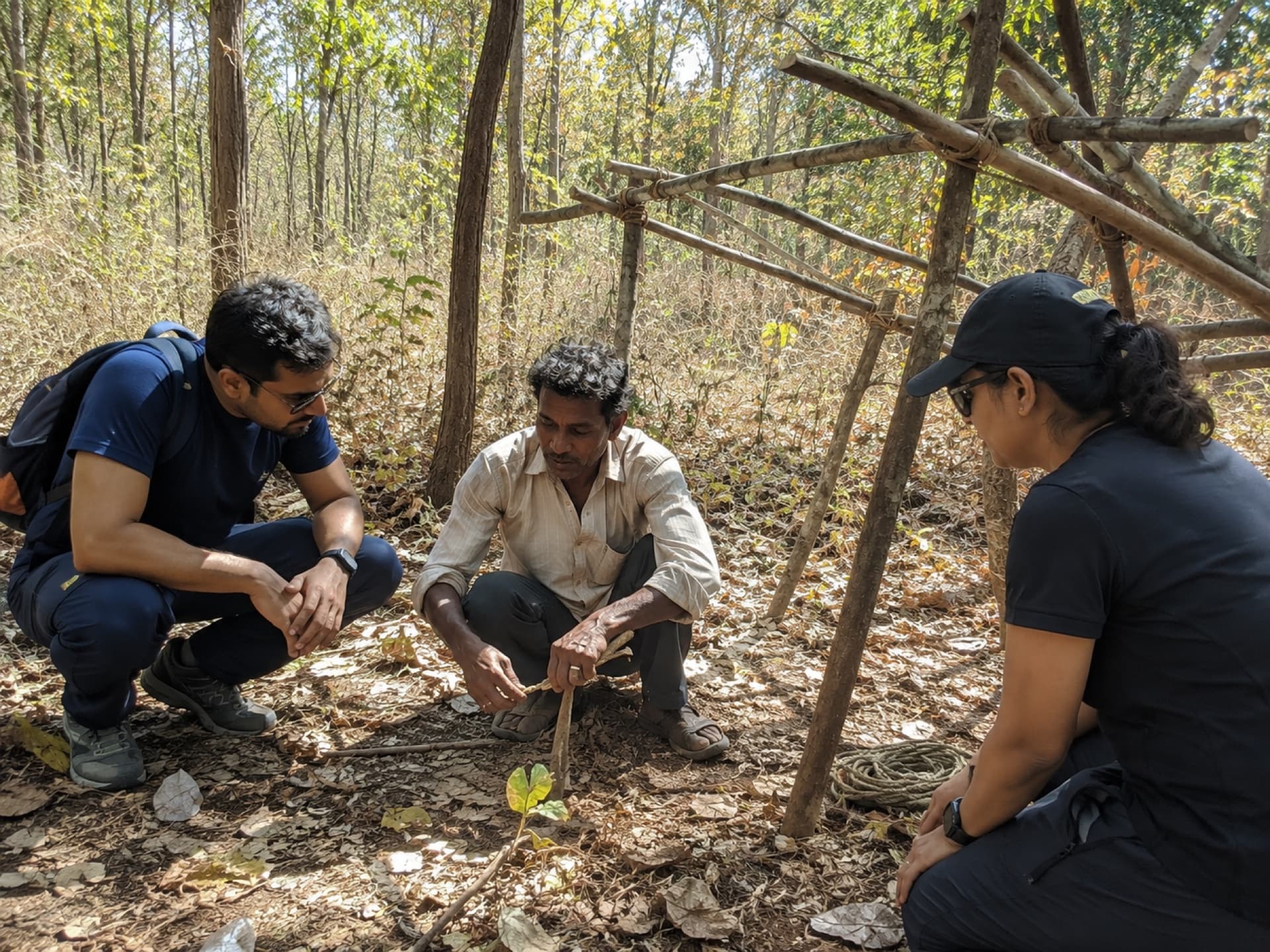
Learning to live simply and capably in the wild.
Explore the Land
A 100-acre private dense forest merging into the Satpura forest and mountains, beside a young river, near Madai (Satpura Tiger Reserve).
Seasonal Rhythms
drag the wheel or tap a season
Before you plan
First-time visitors are advised against May to mid-July/August — the forest is at its harshest and the retreat is closed for long stays.
Closed for long stays from May to end of August (~4 months, monsoon).
Your Stay
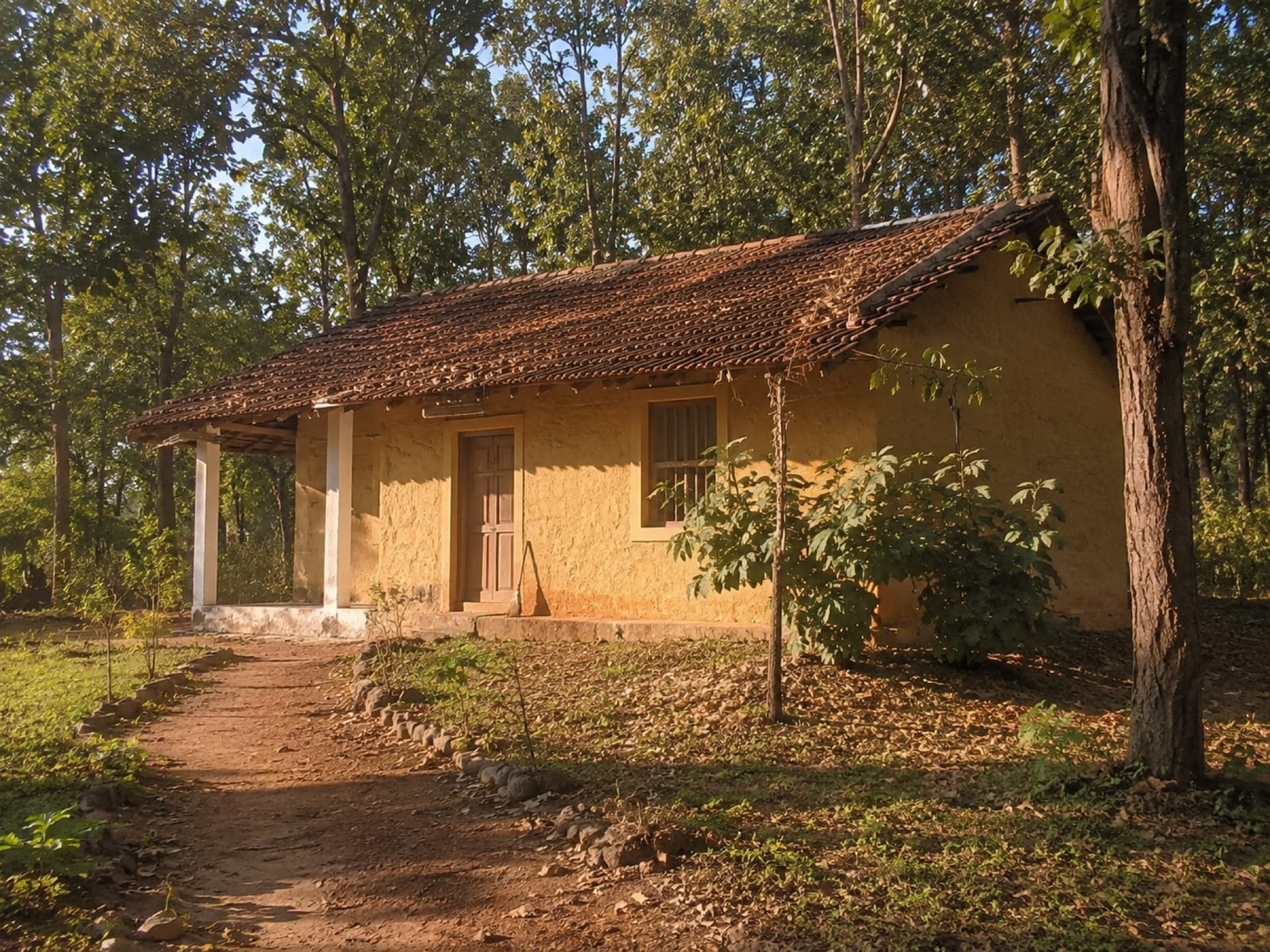
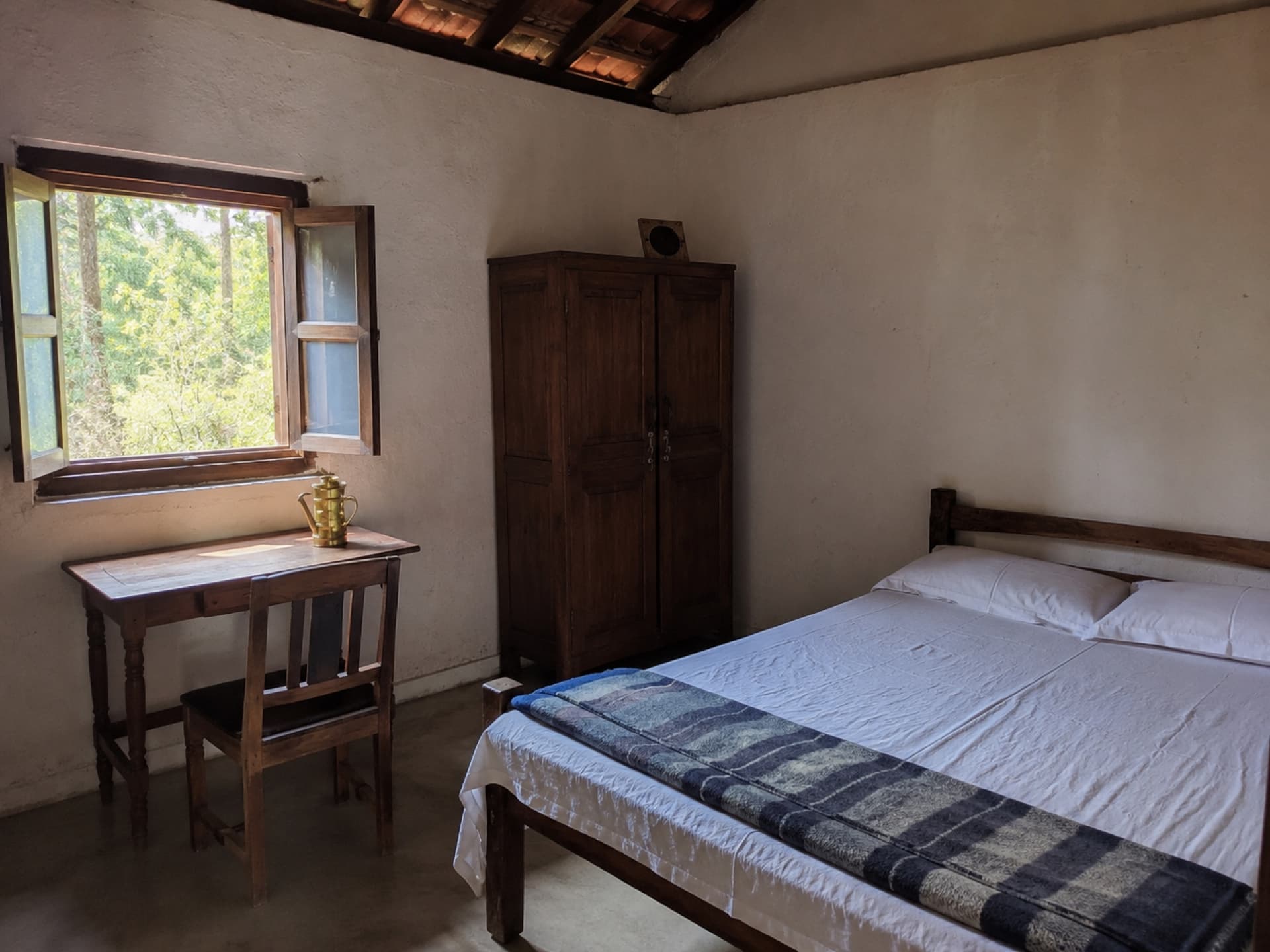
4 cottages today — more are planned.
7 days — the minimum stay, and the point of it. Each stay runs Saturday to Friday.
Single occupancy
Rs. 10,500
per cottage, 7-day stay
Double occupancy
Rs. 16,500
per cottage, 7-day stay
Every stay includes
Guests can earn up to Rs. 4,000 credit by contributing art or labour.
Fair and simple
Rs. 2,000 per person advance on booking — generally non-refundable (to deter nuisance inquiries), but refundable for genuine reasons. Pro-rata refund for shortened stays.
15–20 minutes to an emergency centre in Sohagpur; up to 1 hour to full hospitals in Narmadapuram.
01
By air
Nearest airport: Bhopal, 130 km (~2.5 hr drive).
02
By rail
Nearest railway: Sohagpur (SGP), 12 km; more trains at Pipariya (PPI), 18 km from Sohagpur.
03
The last stretch
Pickup and drop arranged from Sohagpur; Bhopal transfers at actual cost.
04
At the forest
5 km from the Madai entry point of Satpura Tiger Reserve.
In Their Words
The bonfire, the walks, cook Vishnu's food — and the treks with our guide Shaniram, including one to a waterfall — stayed with all of us.
I came to escape Delhi's pollution and my asthma. Please — never modernize this place.
A gradual deepening of awareness and consciousness — that is the only way I can describe what happened here.
Our Story · Why this forest exists
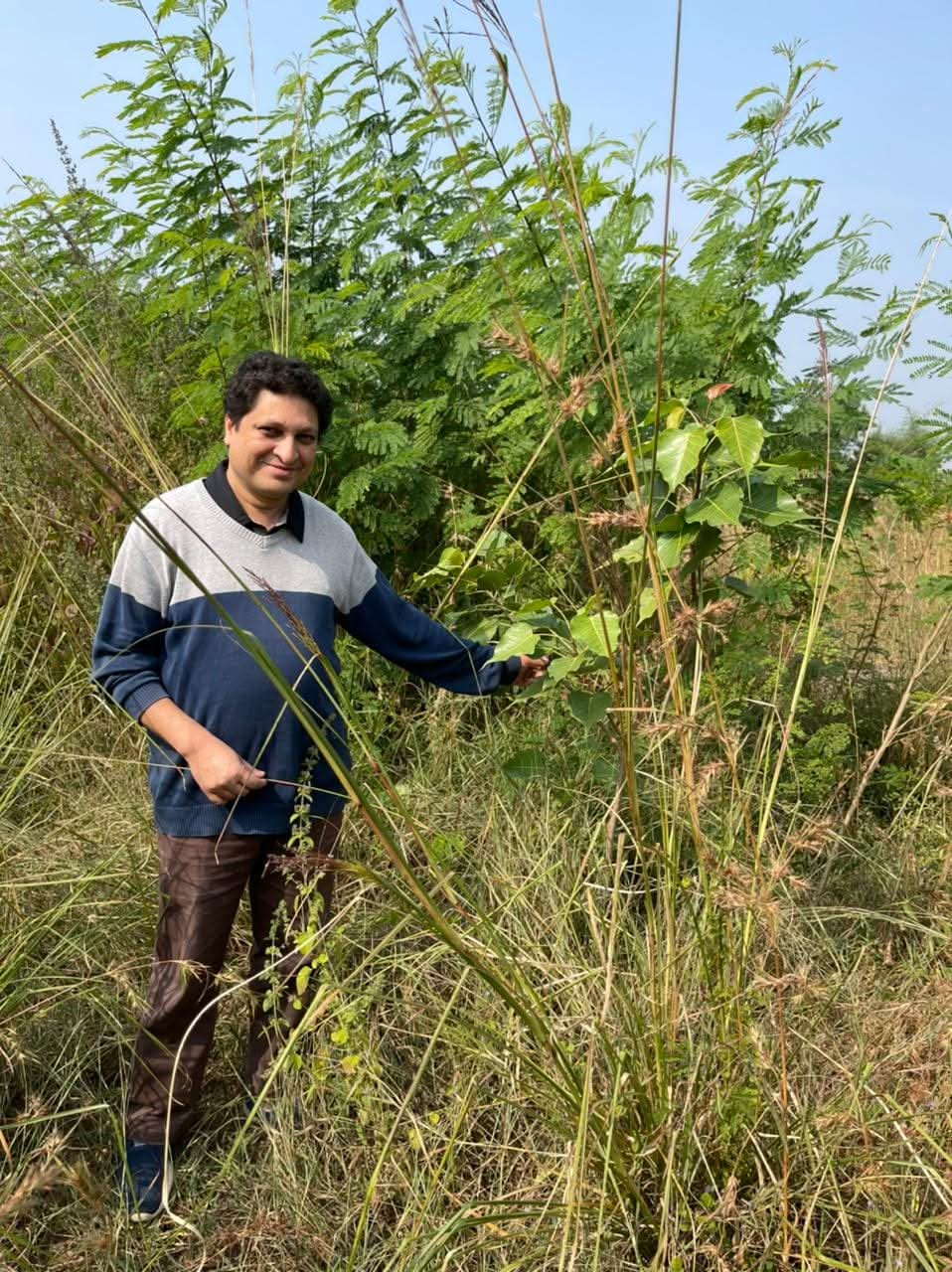
Sandeep Saxena — IIT Kanpur · IIM Lucknow · Indian Oil, Infosys, Cognizant, American Express, Franklin Templeton
01 · The Peak
By his late twenties, Sandeep Saxena had every marker of success — IIT Kanpur, IIM Lucknow, a career that ran through Indian Oil, Infosys, Cognizant, American Express and Franklin Templeton, and a life in the United States at the top of the corporate world. And still, a quiet question kept returning: what next?
02 · The Question
Working inside global finance, he watched money being printed and steadily losing its value, growth that no longer seemed to need people, a world racing faster while nature paid the price. A line from a film had stayed with him since childhood — “my pain is my destiny” — and it kept whispering that the race had an end, and no meaning at the end of it.
03 · The Accident
While quietly roaming the forests and land of central India, already deciding to walk away from it all, he had a severe car accident near Hoshangabad. For a few moments he believed he would not survive. He did. In the hospital, one thought was absolute: at thirty-one, I have done nothing. The decision was made — he left the corporate world for good.
At thirty-one, I had done nothing.
04 · The Return
He came back to Bhopal. Everyone offered him money and status — run an institute, teach, earn lakhs. He wanted none of it. He tried the “efficient” modern dream instead: organized retail, an India-scale plan. Within months he realised the story he had been told — helping farmers, cutting out the middleman — simply wasn't true on the ground. Then a massive fire destroyed a cold storage, and with it, that entire chapter. Looking back, he calls the fire a blessing. It set him free.
05 · The Cobra
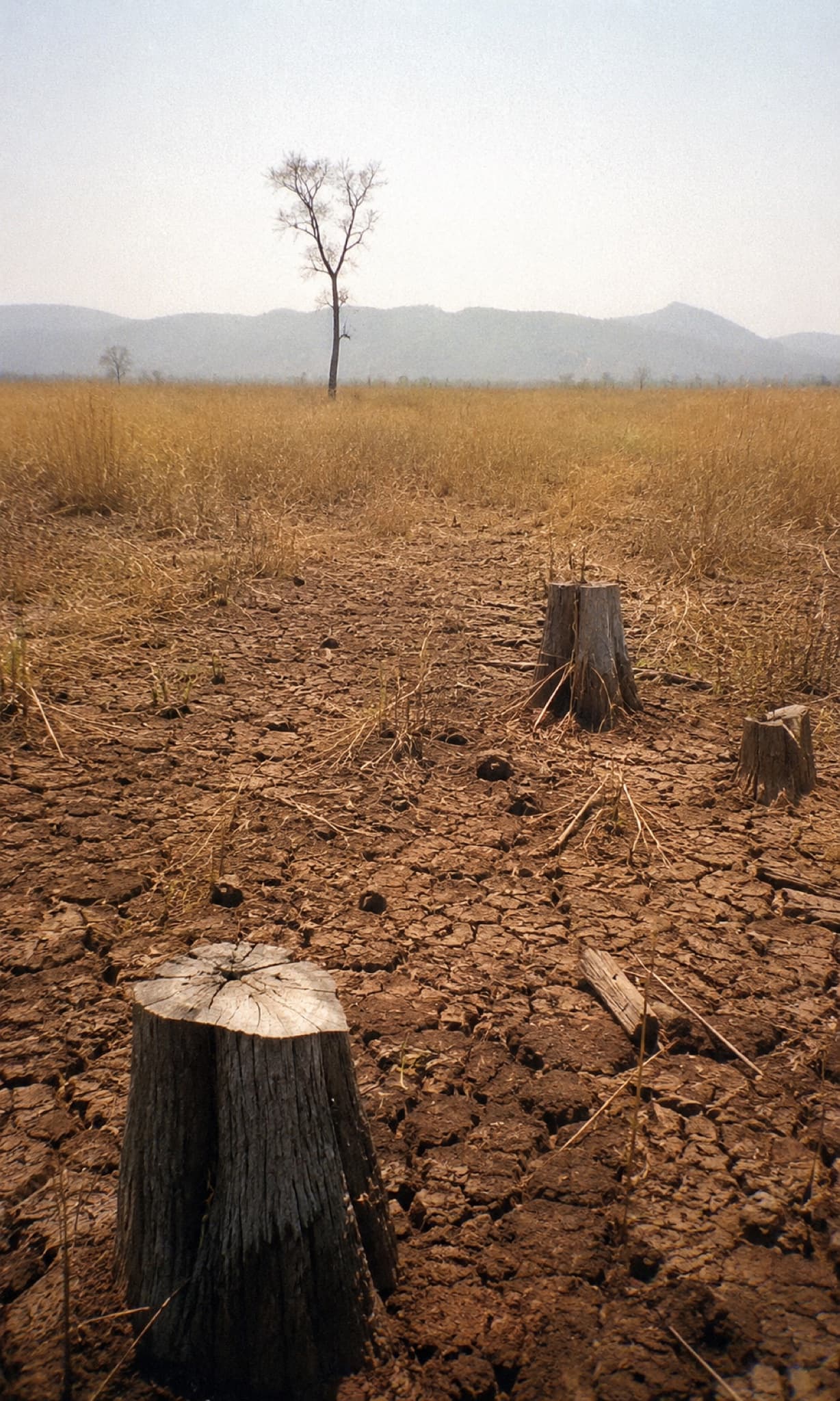
Searching for a piece of land, he found one deep inside the forest — degraded, its trees felled, only tall grass and hidden animals. His first instinct was to sell it. Then a king cobra appeared. The villagers told him: come back and it won't be here — we'll kill it, so you'll stay. In that moment he decided he would not sell. He would stay, and he would protect this land and everything that lived on it. He built his home beside the cobra. Their coexistence lasted fifteen years.
06 · The Revelation
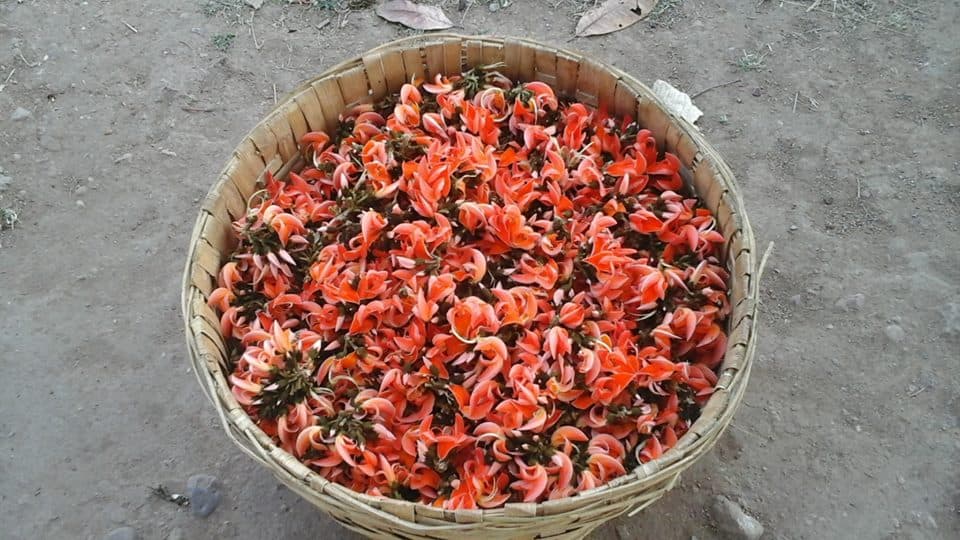
He chased “organic” farming and found a half-truth — it changed one input but kept the tilling, the monocropping, the un-natural seeds that break nature's web. Western methods gave him no answer. Then someone pointed him to a forgotten chapter of the Rig Veda — Aranyani, the forest goddess, the only goddess in it. Its essence: live, eat and learn where the colours, the fragrances and the sounds change with every season, every fortnight. He set out to build exactly that — Palash orange, Semal red, turmeric gold; the scent of mahua in May and of first rain on soil; winter's silence breaking into the birdsong of spring.
Live where the colours, the fragrances, and the sounds change with every season.
07 · The Living Forest
He brought back the bees that had vanished from the Satpura — and to bring back the bees, every missing flower had to return, and with the flowers came the colours, the fragrances, the sounds. He learned that the forest does not give you the tree; it gives you something new the whole ecosystem creates together. And he learned from the tribal families around him — their intuitive, unhurried care made living what his methods could not. Slowly, a real forest stood again.
The forest does not give you the tree — it gives you what the whole forest creates together.
08 · Today
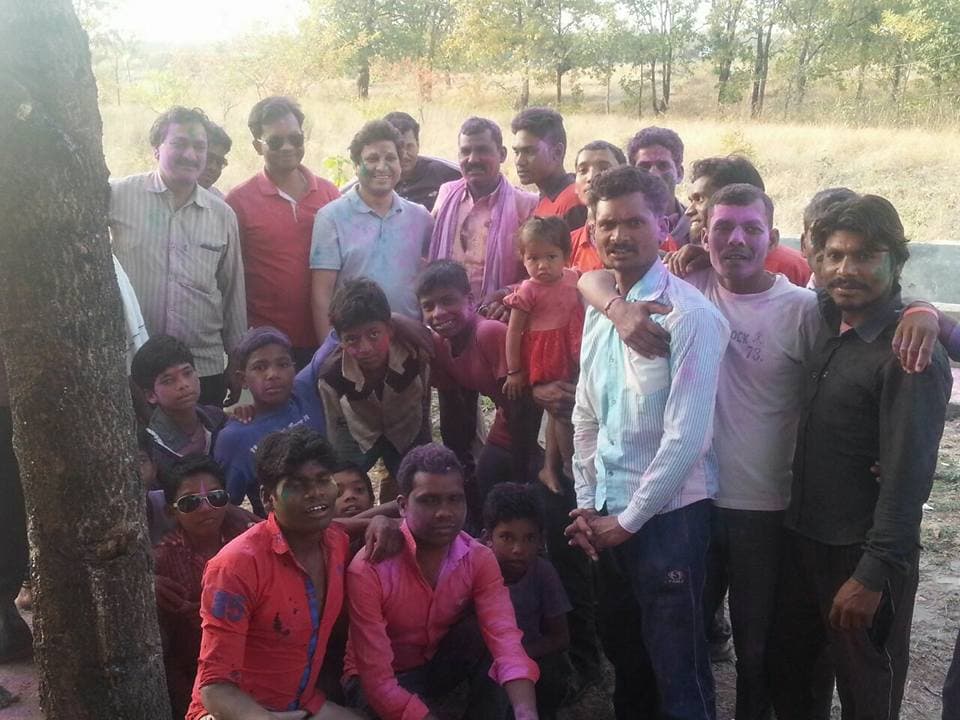
Aranyaani is now a living forest, tended with the tribal community — and a place where anyone worn down by the modern world can come, slow down, and remember how to be well. The retreat you see today grew from this story. It is an invitation to return.
To heal is to habituate.
His return became a place you can return to.
Moments from Aranyaani
Aranyaani Drone View
2019
Making of Aranyaani
2016
Documentary
2021
Explore more of our world
Each stay runs Saturday to Friday. 7 days — the minimum stay, and the point of it.